AI workflow builder
A workflow builder for work that has to be right.
General automation tools connect apps. An AI workflow has a harder problem: each step produces language, and language does not have a stable shape unless something makes it one. That is the difference between a demo and a process you can run monthly.
Available now
Composer, public Guard scans, workspace records, policy, activity metadata and scoped keys.
Preview
Skill and Agent execution, Memory retrieval, schedules, publishing, billing and unified execution.
Context
Where AI workflows usually break
Not in the connections. In the parts that only show up on the fifth run with real input.
Step two receives prose when it expected a field, so the branch condition silently takes the wrong path.
A prompt improvement upstream changes the shape of a business output nobody was watching.
The process needs a human to approve something, and there is nowhere for that to happen without leaving the tool.
Nobody can answer why last Thursday's run produced a different result, because the run was not recorded.
Evaluation
What makes an AI workflow survive
Six properties worth more than another hundred integrations.
Typed steps
A Skill declares its input and output schema, so the next step can rely on the shape and a schema failure is a failed run rather than a silent pass.
Pinned versions
A process that produced a compliance matrix last quarter should produce the same shape this quarter. Business workflows pin by default.
Human approval as a node
The run pauses, holds its state, consumes no credits, and resumes when the approval arrives — including through the API.
Memory retrieval as a step
Planned: retrieve context from a named collection at the point it is needed and return citations. Retrieval does not run today.
Real execution states
queued, validating, retrieving_context, selecting_model, running, validating_output, completed, failed — not an indefinite spinner.
Run history
Planned: record trigger, model, Skill calls, Memory retrieval, usage and result. Workflow runs and their history do not exist today.
GenCMS
Persisted drafts and the planned GenCMS node set
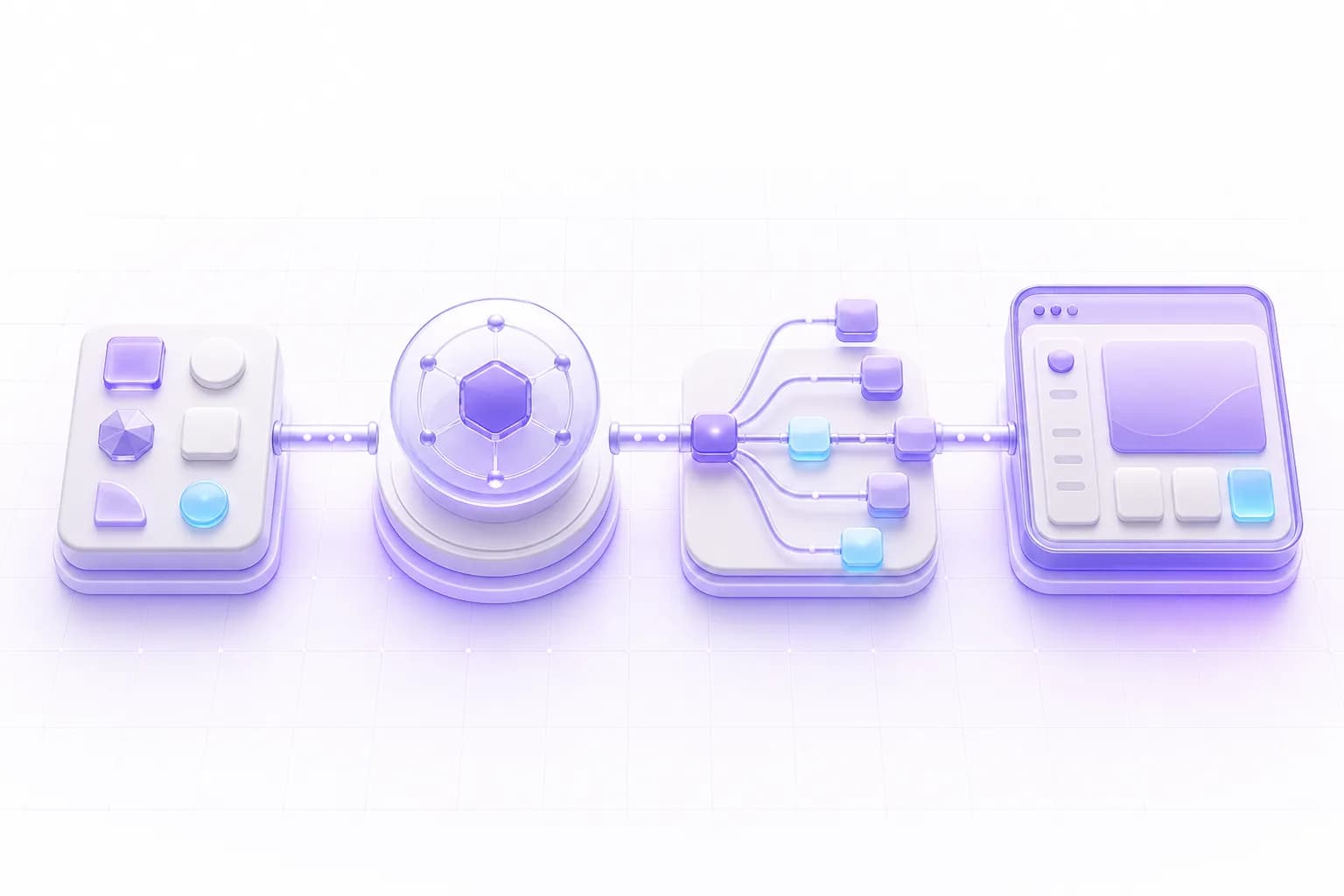
Tenant-scoped Workflow draft configurations can be created, edited and deleted today. Node execution, approvals, schedules and publishing are not implemented.
Input and Output
Typed entry and exit — file, URL, text or structured record in; export, publish, email or API response out.
Node reference →Model and Skill
A direct model call, or an installed Skill at a pinned version with its schemas enforced.
Browse Skills →Memory and Condition
Planned nodes would retrieve from named collections and branch on a prior typed output. Neither node executes today.
See Memory →Approval and HTTP
Planned nodes would pause for a person or call an external endpoint. Neither action executes today.
See Workflows →Questions
Asked before you commit.
Is this a Zapier replacement?
No. GenCMS can persist Workflow draft configurations, while the planned runtime focuses on AI steps with typed outputs and approvals. The drafts are not executable today and this is not a general SaaS automation platform.
Can a workflow wait for a person?
Human approval is part of the proposed node design, but pausing and resuming a run is not implemented today.
What happens when a model is unavailable?
The design distinguishes automatic rerouting from fixed-model failure. Workflow execution and this fallback behavior are not connected yet.
Can I trigger a workflow from my own code?
Not today. The workflow run endpoint shown in preview documentation is not deployed as a public interface.
Inspect the process design.
Create and review tenant-scoped Workflow drafts, then inspect the proposed node set before execution becomes available.
GenCMS is a product of IGEARS TECHNOLOGY LIMITED. Guard results describe observed signals, not guarantees.